
Opioid Reversal Guide
Know what to do when seconds count. This free guide walks you through how to recognize an opioid overdose and how to use Narcan (naloxone) step by step, with plain-language instructions ready for you to use.
Inside the guide:
Signs of an overdose: unresponsive or can’t be woken, slow or stopped breathing, gurgling sounds, blue or gray lips and fingertips, and pinpoint pupils.
How to use Narcan: nasal spray lay the person on their back, tilt their head back, insert the nozzle into one nostril, and press the plunger firmly.
What to do next: call 911, give a second dose in the other nostril after 2-3 minutes if there’s no response, and stay with the person. If they’re breathing, turn them on their side. Naloxone can wear off before the opioids do, so the person needs medical care even if they wake up.
Fentanyl: it’s now common in the drug supply, and it can take more than one dose.
What California residents should know:
Naloxone is a safe, generic, non-narcotic drug, and state law has allowed pharmacists to furnish it without a prescription since 2016.
California’s Good Samaritan law encourages people to call for help at an overdose without fearing arrest or prosecution for minor drug law violations.
A person who acts with reasonable care and in good faith, without pay, when giving naloxone is also protected from civil liability.
Organizations can get free naloxone through the Department of Health Care Services’ Naloxone Distribution Project. Please contact us if you are needing any Naloxone.
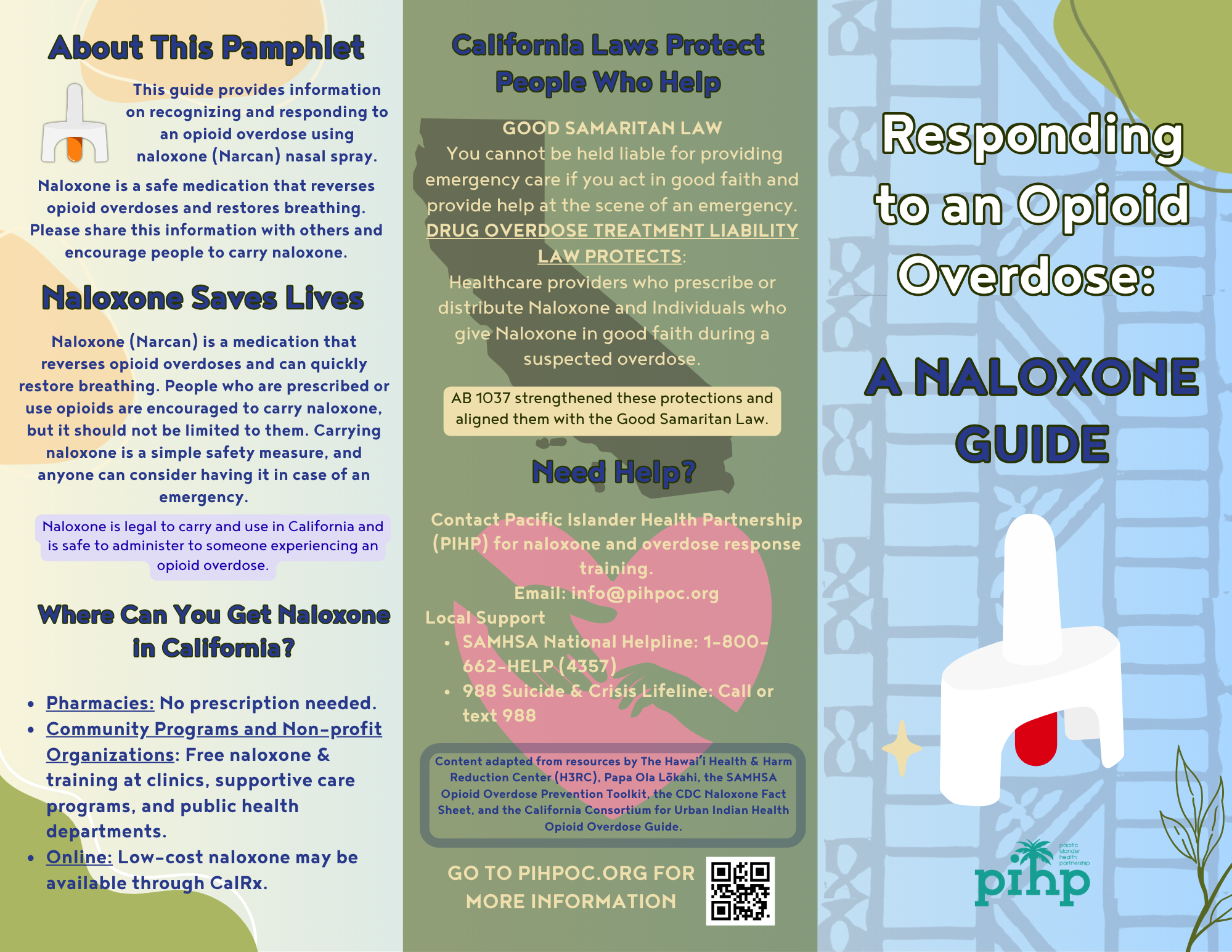
Outside
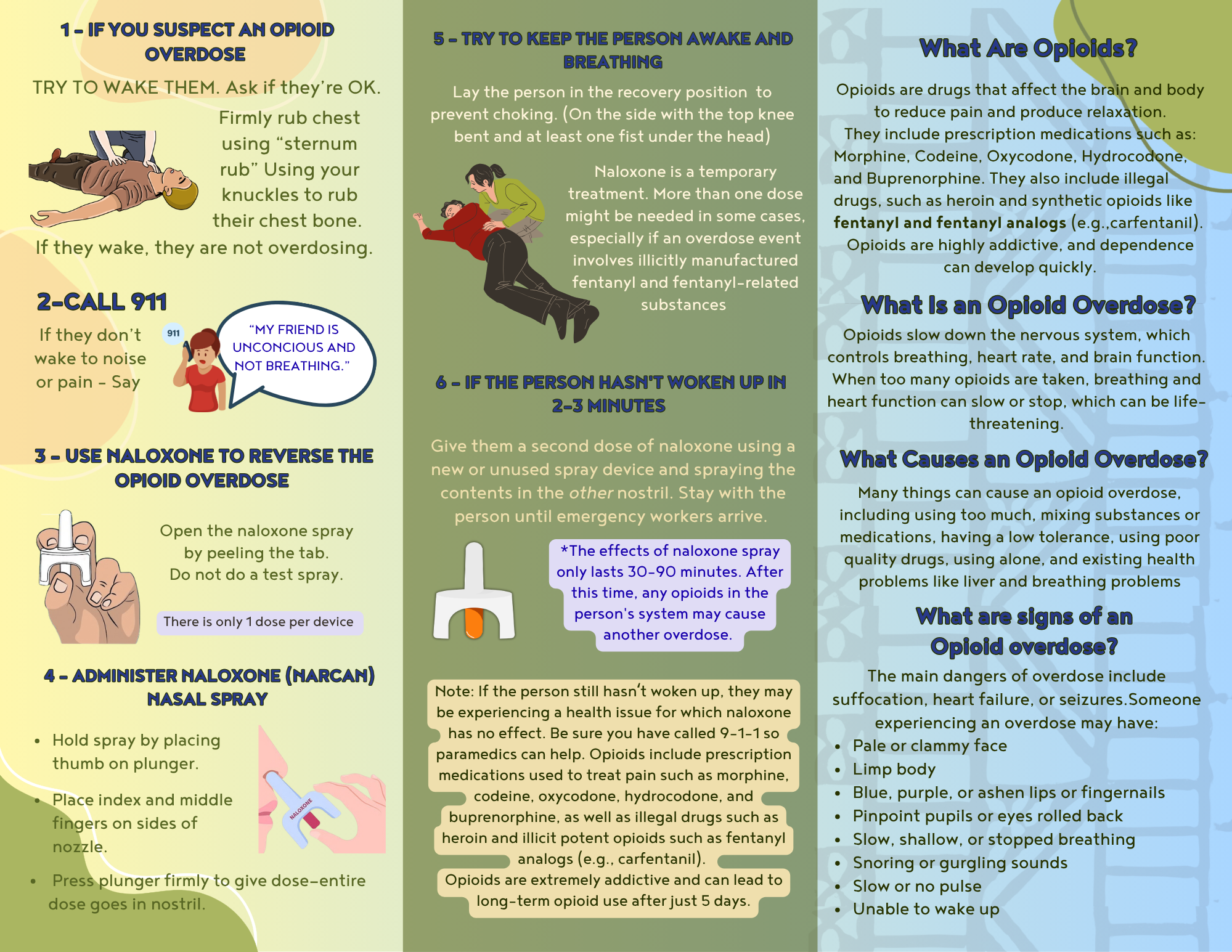
Inside
Immigration Cards - PDF
All people in the United States, regardless of immigration status, have certain rights and protections under the U.S. Constitution.
Immigration cards are available for download in the following languages: Arabic, CHamorro, English, Japanese, Khmer, Korean, Marshallese, Samoan, Simplified Chinese, Spanish, Tagalog, Tongan, Traditional Chinese, Vietnamese.
Directions on how to use your red card here.
How to Use the Red Cards: Illustrated & Multilingual

Our Pacific Islander Navigators (PINS)

Our Pacific Islander Navigators (PINS) provide assistance and services in Chamorro, Marshallese, Hawaiian, Samoan, and Tongan languages. They work together with faith and community-based organizations in Orange County and Los Angeles to offer health information and services that cater to our community needs. Please fill out the form below to get in contact with one today.
RESOURCES


